No products added!



Natural heritage, traditional uses, artisan craftsmanship and the importance of conscious living.
NATURE. SKILLED HANDS. EVERYDAY PURPOSE.
Craftsmanship, responsible sourcing and why natural materials matter in sustainable everyday living.
A Tree That Has Been Part of Indian Life for Generations
Long before words like sustainability, eco-friendly and conscious living became fashionable, neem had been part of everyday Indian life.
For many of us, neem does not feel like an exotic new product – we have seen the tree growing beside homes, temples, farms and village roads. Different parts of the neem tree have also had their traditional uses in Indian household, agricultural and wellness practices for generations.
This is important history, but so is the caution in how we share this today.
Neem has a strong place in traditional practices, but that does not mean every product made from neem automatically needs to be marketed as a medicine.
Tradition should be respected. But it should also be reported accurately.
The Natural Power of Neem
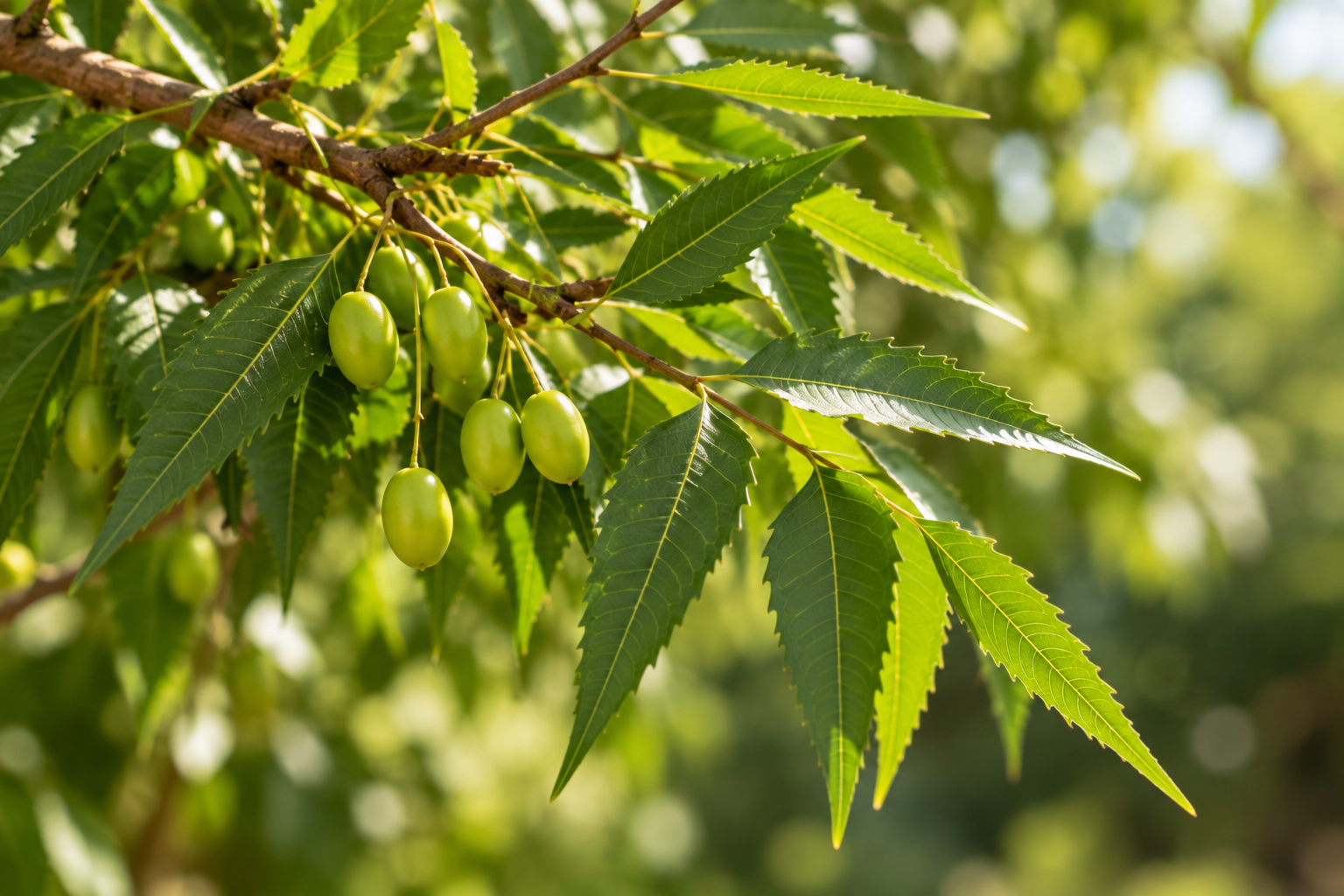
Neem (Azadirachta indica) is a native tree to the Indian sub-continent, and has become associated with Indian traditional knowledge. Its leaves, seeds, oil, bark and twigs have been used throughout generations for various purposes. This is one reason why neem is much more than another type of wood.
Modern scientific research has also investigated compounds in various parts of the neem tree.
However, there is an important distinction: research surrounding neem leaves, neem oil, bark or extracted compounds cannot automatically be applied as a health claim about a neem wood comb.
For RUDHO, this is an important distinction. We can celebrate neem’s heritage, but we can never tell customers that a wooden comb can cure dandruff, prevent hair loss or treat a scalp condition.
Neem and Traditional Medicine
Neem has had a long history of use in Indian traditional systems and household practices. Different parts of the tree have had their traditional uses, and neem has also been subject to scientific research for its biological compounds.
That gives neem an extraordinary heritage. But traditional use and clinically proven treatment are not the same thing.
When RUDHO talks about the “natural power of neem”, we should therefore be telling the full story.
Natural power is not just a list of medical claims. It is the fact that one tree has supported traditional practices, agriculture, material use and community life for generations.
From Neem Tree to Neem Wood
When most people hear “neem”, they think of neem leaves. But wood is one part of the material story.
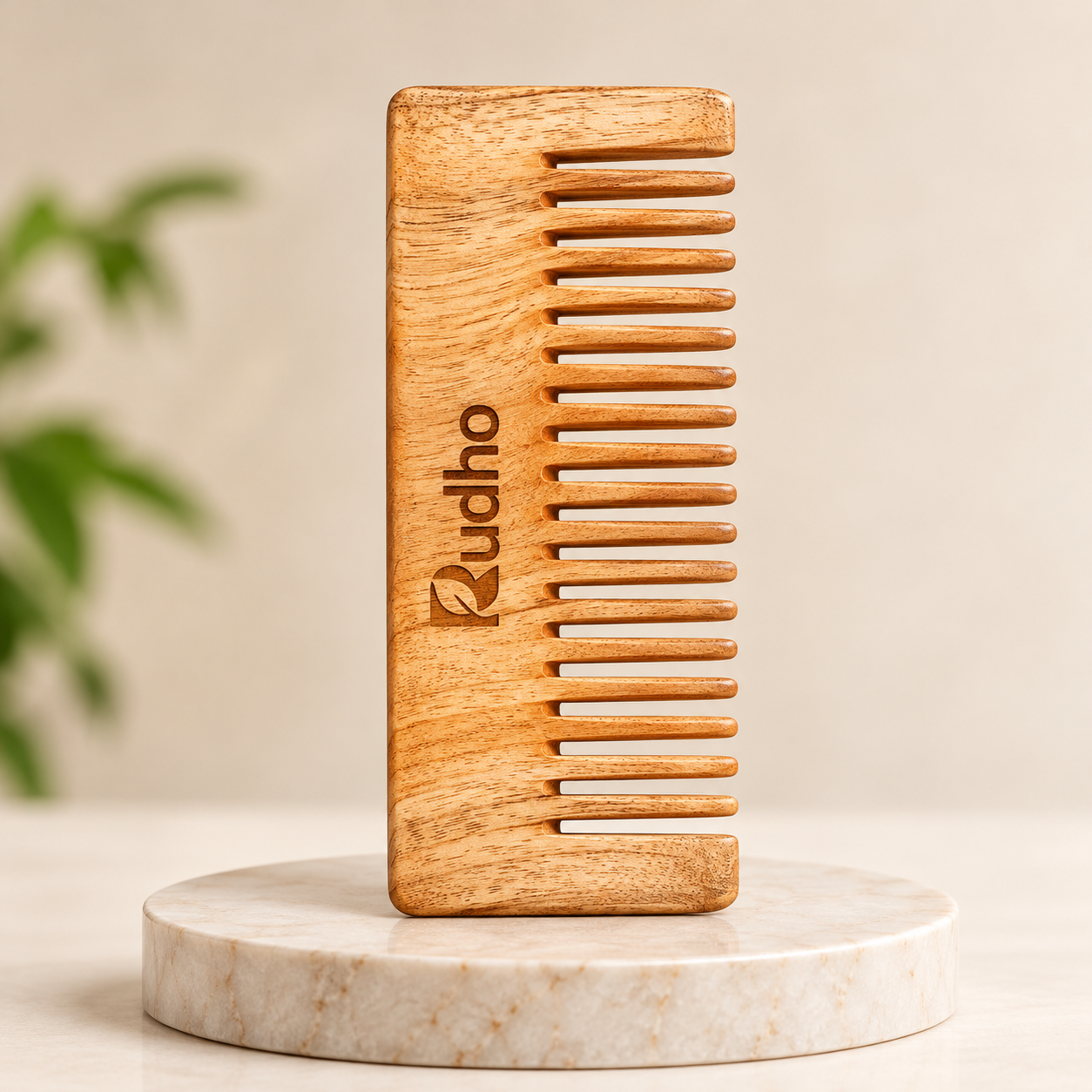
Neem wood can be carved into all sorts of practical objects, including everyday grooming accessories.
And this is where something interesting happens – a natural raw material meets human skill!
A piece of wood does not become a beautifully finished comb on its own. It requires people.
The Artisan Behind the Product
When you hold a wooden product, you can most likely see the final product before you: a comb, a handle, a row of expertly carved teeth.
But behind a well-crafted wooden product can be a number of human processes. The wood has to be selected and prepared. The product has to be shaped. Teeth have to be cut accurately. Edges have to be finished. Surfaces have to be smoothed. The final product has to be inspected.
For small-scale woodworkers and artisan communities, these skills can be a part of their livelihood.
Sustainability isn’t only about the material. It’s also about the people behind the material.
When You Buy a Product, You Are Also Supporting a Chain of Work
Think about a simple neem comb. To the customer, it is one product. But behind that product can be a chain of work involving raw-material suppliers, craftspeople, workshops, finishing, quality checking, packaging, transportation and sellers.
This is why responsible sourcing matters. A sustainable brand should not talk only about how natural a material looks.
We should also ask: Where did it come from? Was it sourced legally and responsibly? Who made the product? Was craftsmanship valued? Can the product be used for a reasonable period? Is the packaging sensible? What happens when the product reaches the end of its useful life?
These questions make sustainability more than a marketing tag. These questions make a responsibility as a business.
Artisans Are Not Part of the Decoration
Sometimes, a sustainable brand will put an artisan’s hands in a beautiful photograph and that is it.
That is not enough. If craftsmanship is a part of the brand story, then artisans should be treated as a part of the value chain and not simply a part of the decoration.
Traditional and small-scale skills can survive as long as there is a meaningful demand for well-made products and fair, dependable economic opportunity.
The aim should not be to romanticise rural livelihoods. It should be to build business relationships where craftsmanship has economic value.
Why Natural Materials Matter in Modern Life
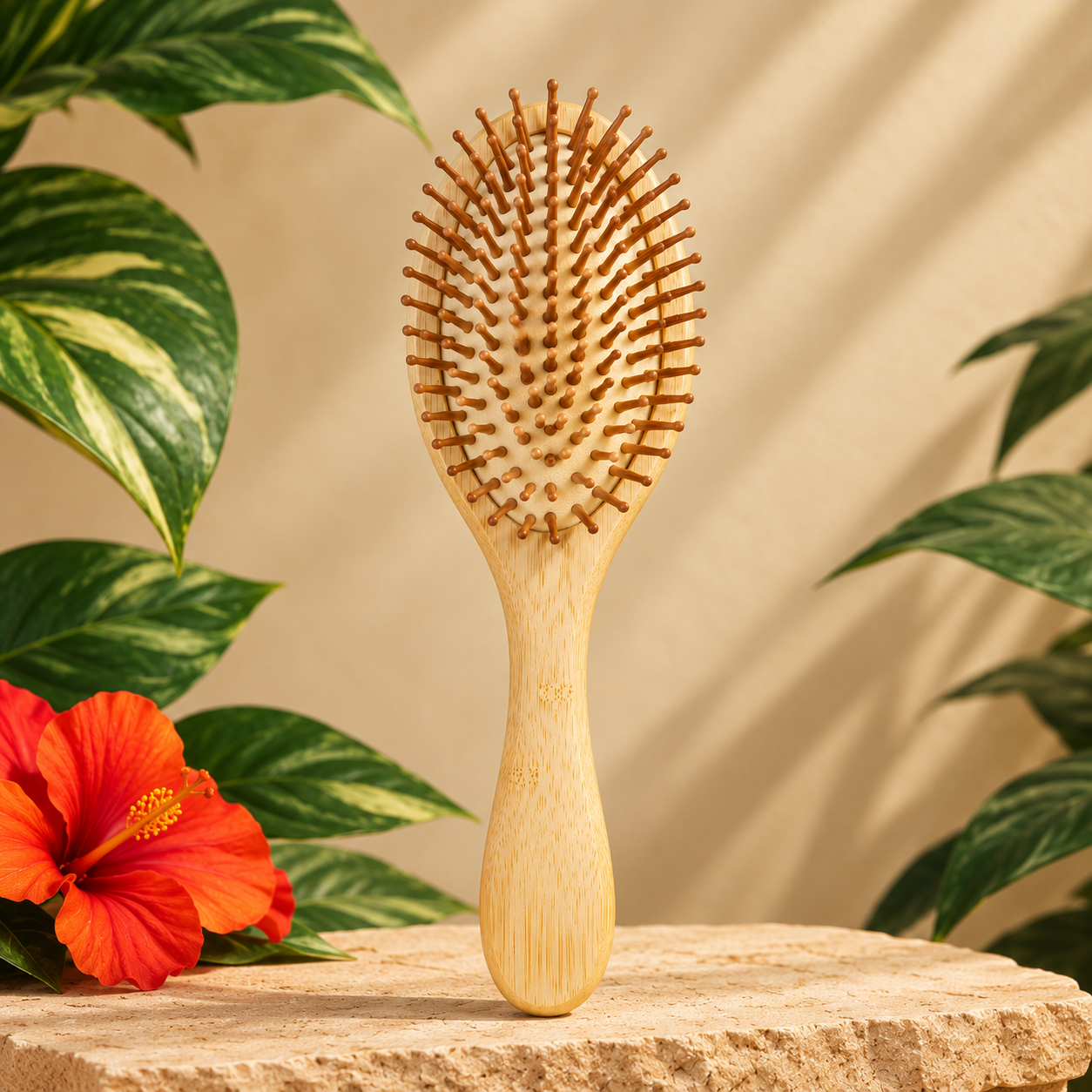
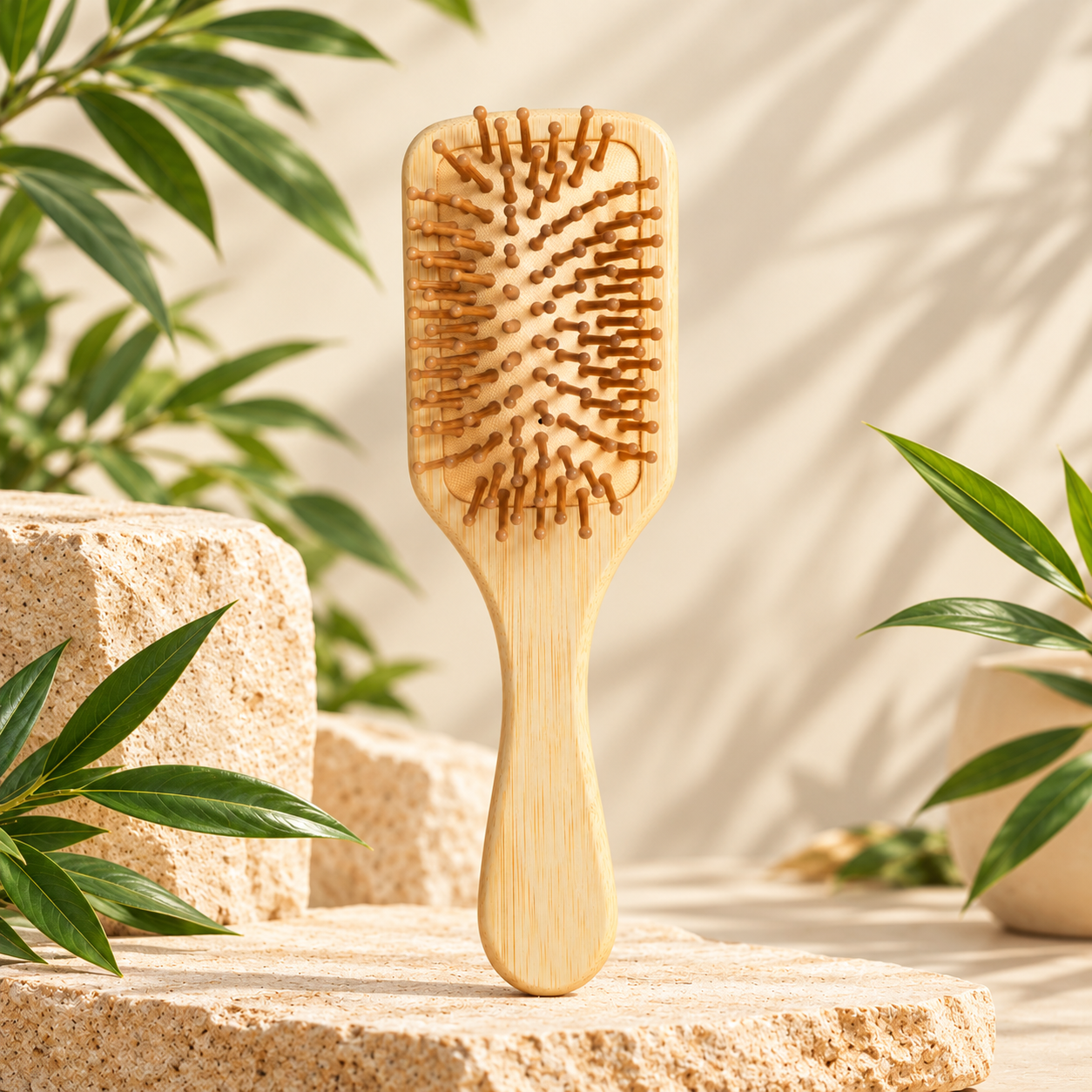
Look around an average bathroom or dressing table: toothbrush, comb, hair brush, cotton buds, bottle, bath scrubber and tongue cleaner.
These are all small products on their own. But they are used by millions of people over and over again.
Which is why RUDHO focuses on everyday products.
Sustainable living does not always start with solar panels, electric cars or renovating your house.
Sometimes, it starts with a much smaller question: when this everyday product needs replacing, is there another material I can reasonably choose?
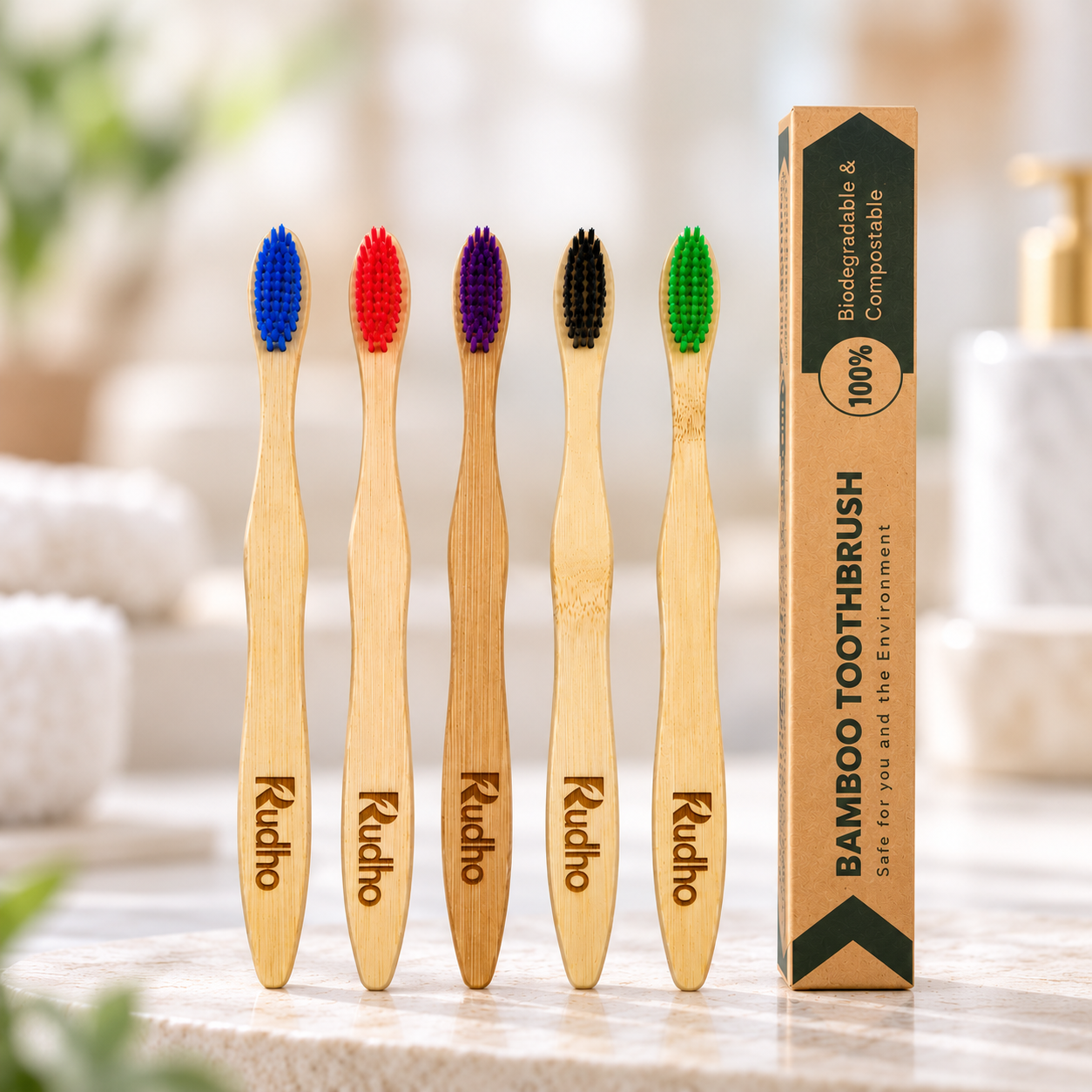
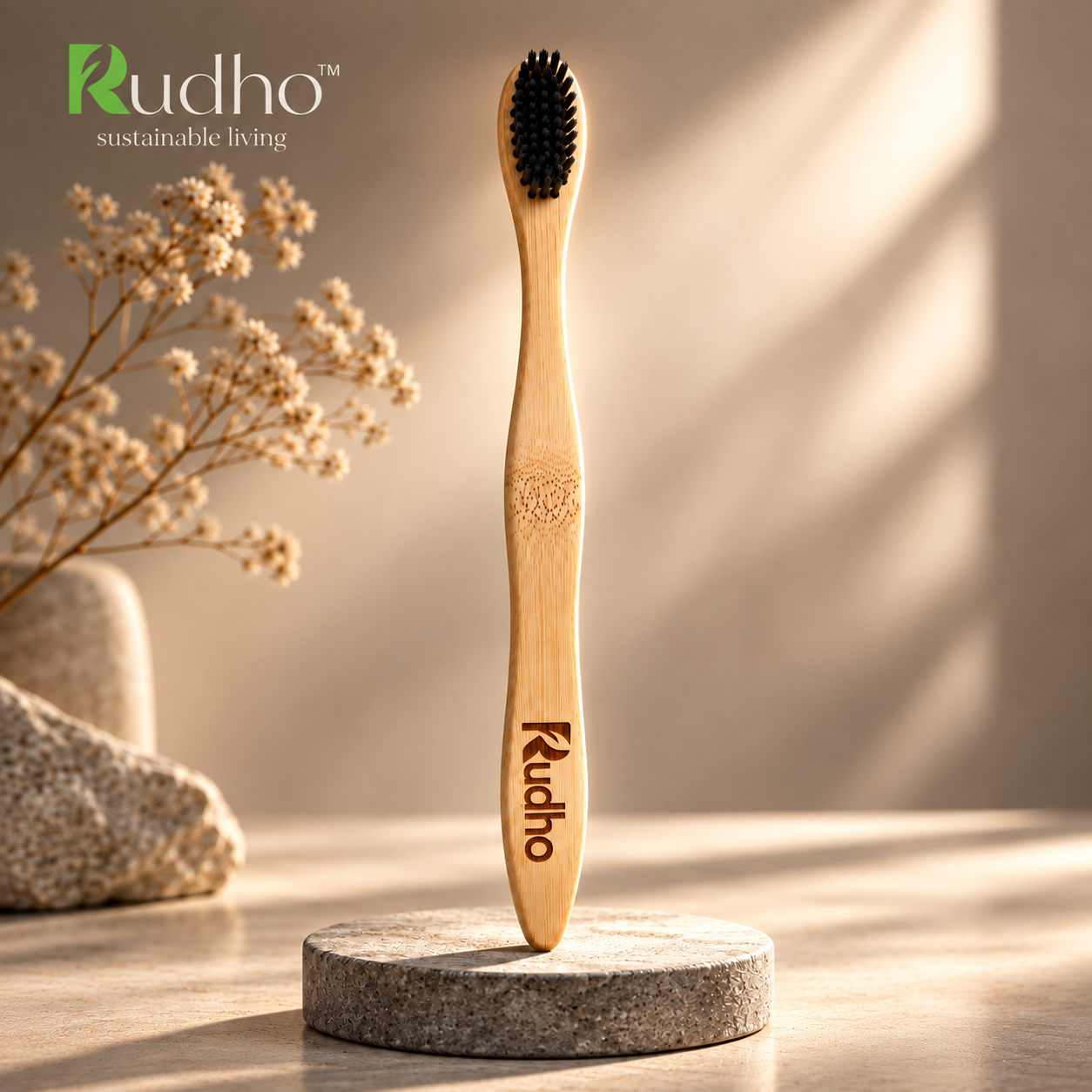
For a comb, neem wood may be one of those choices. For a toothbrush handle, bamboo may be one.
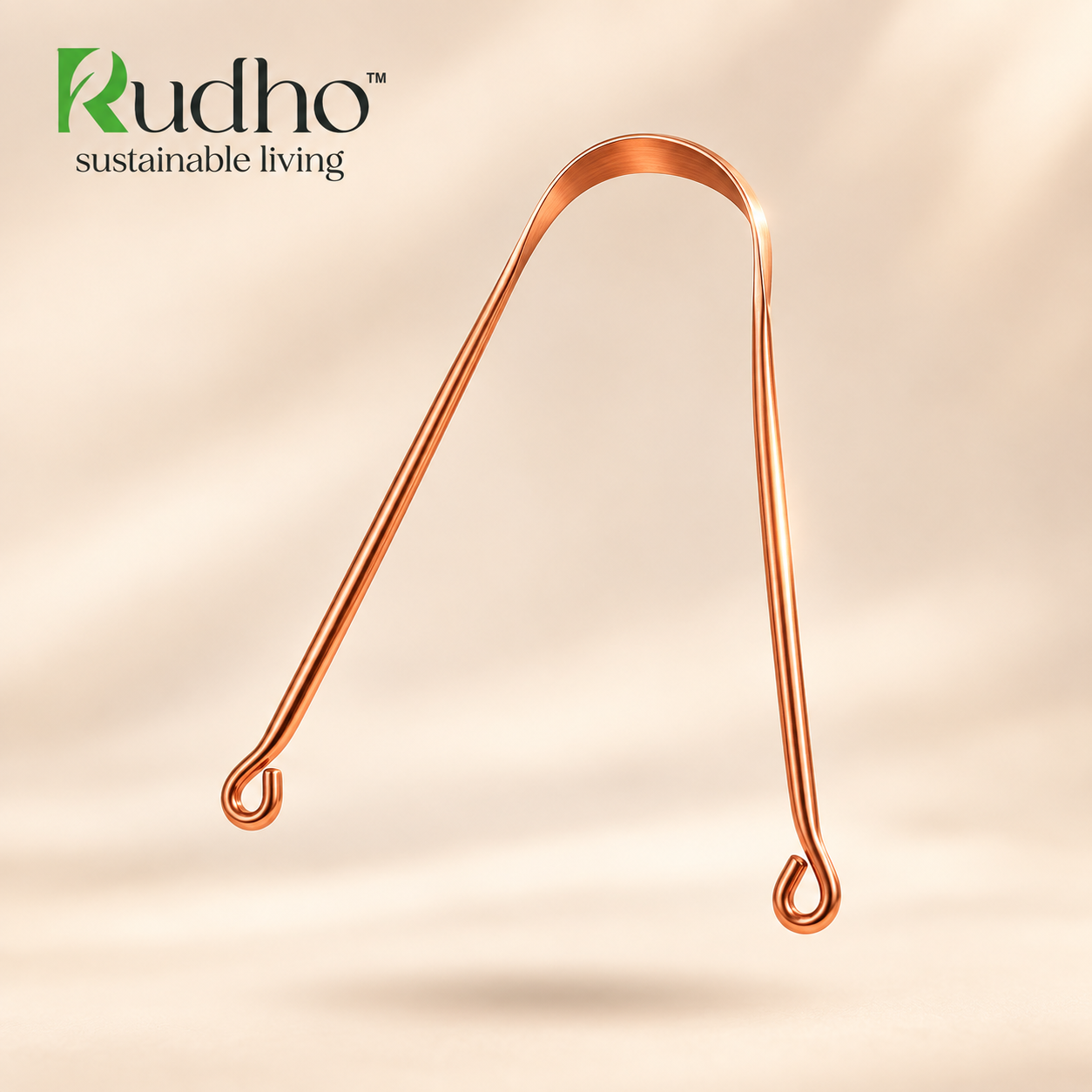
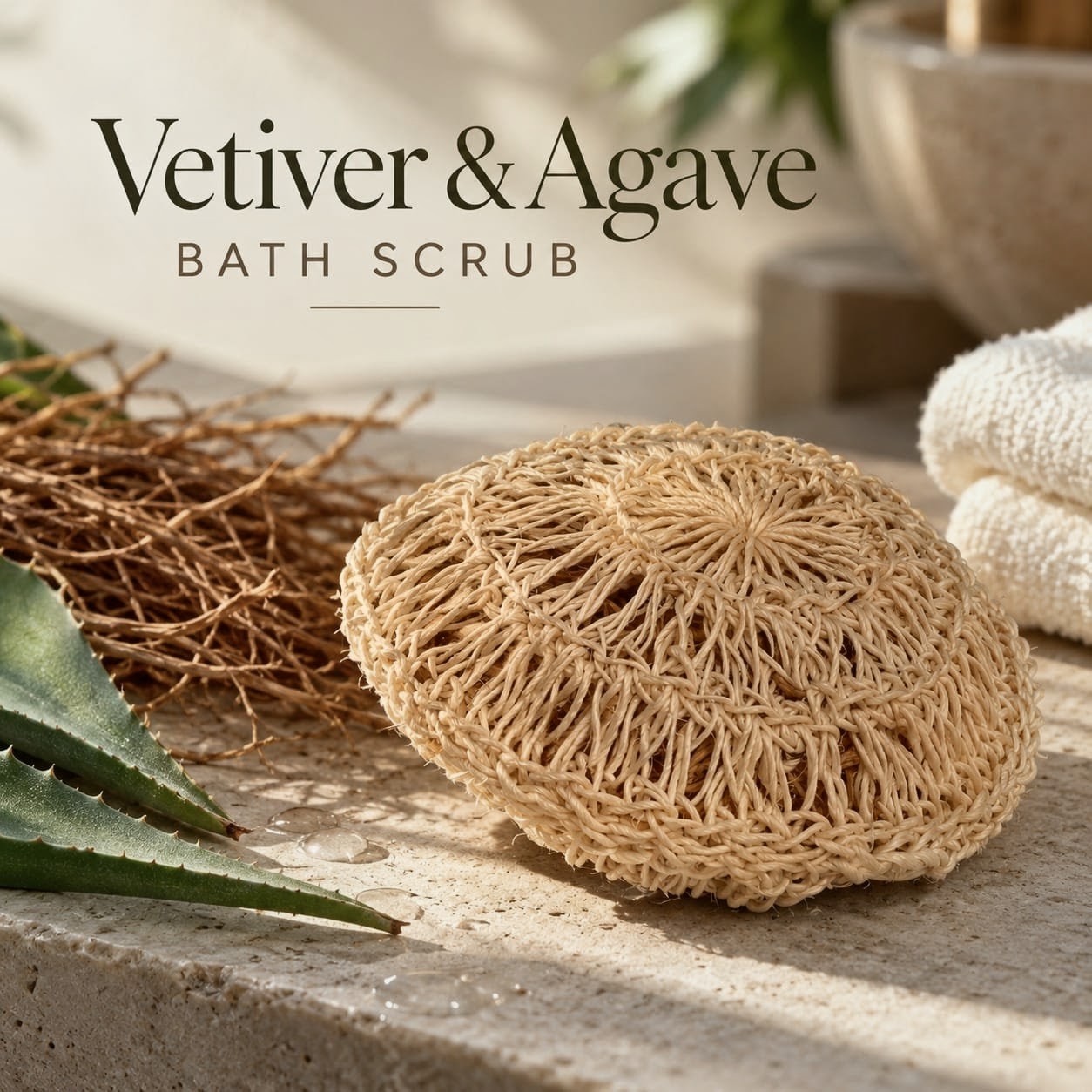
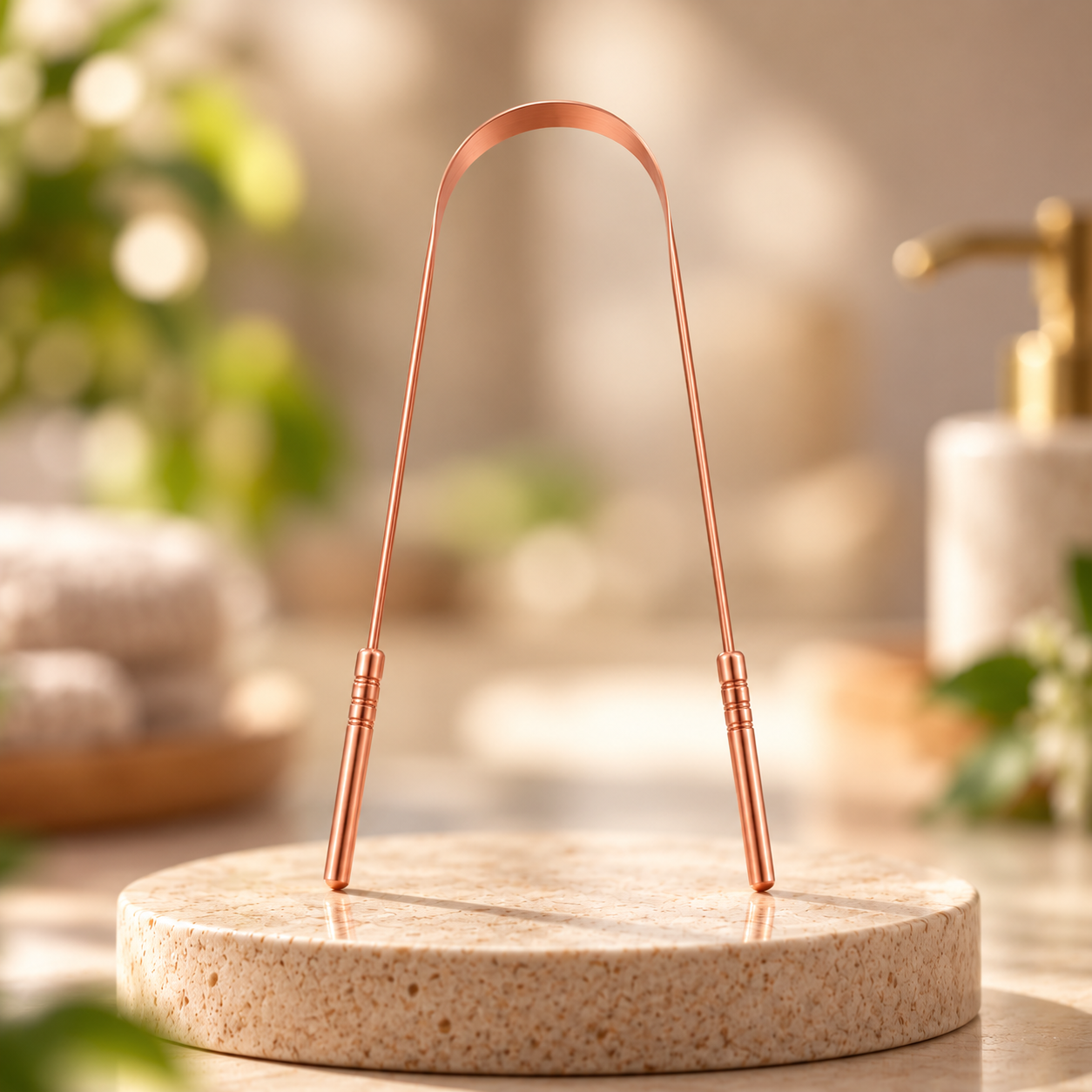
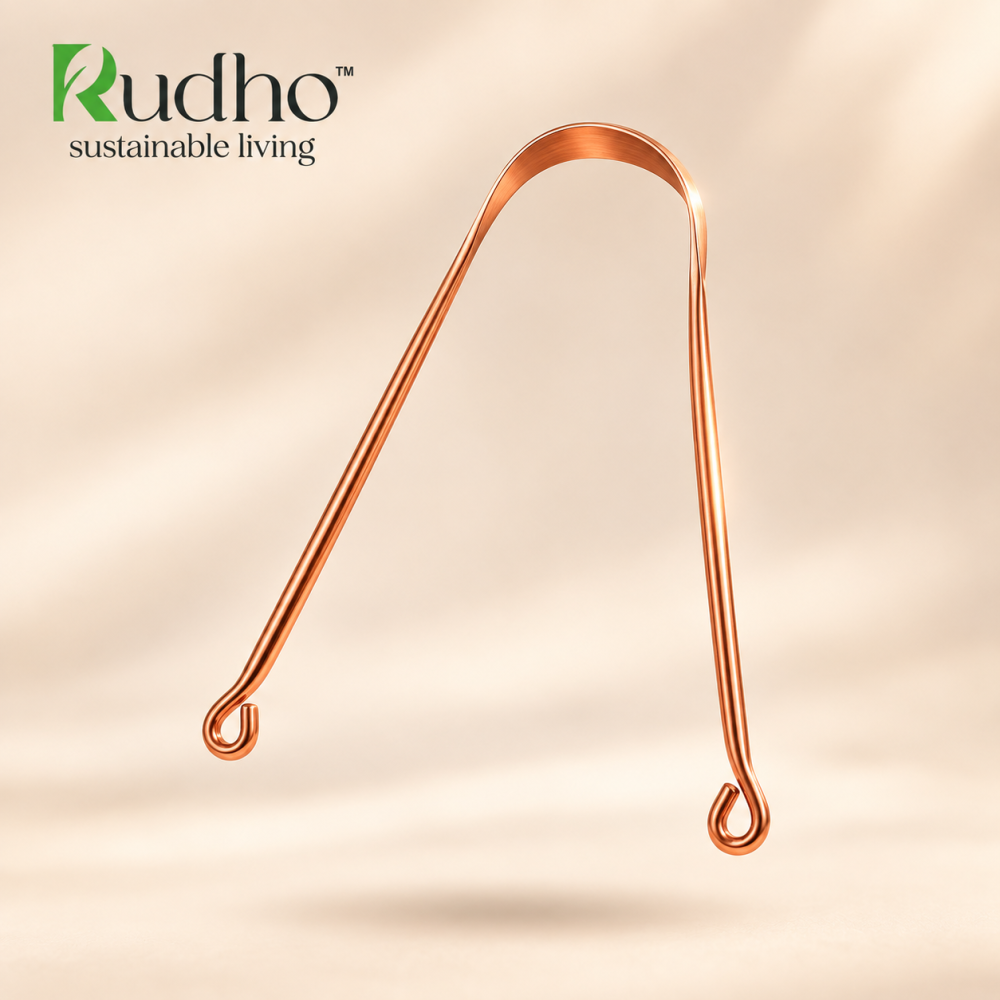
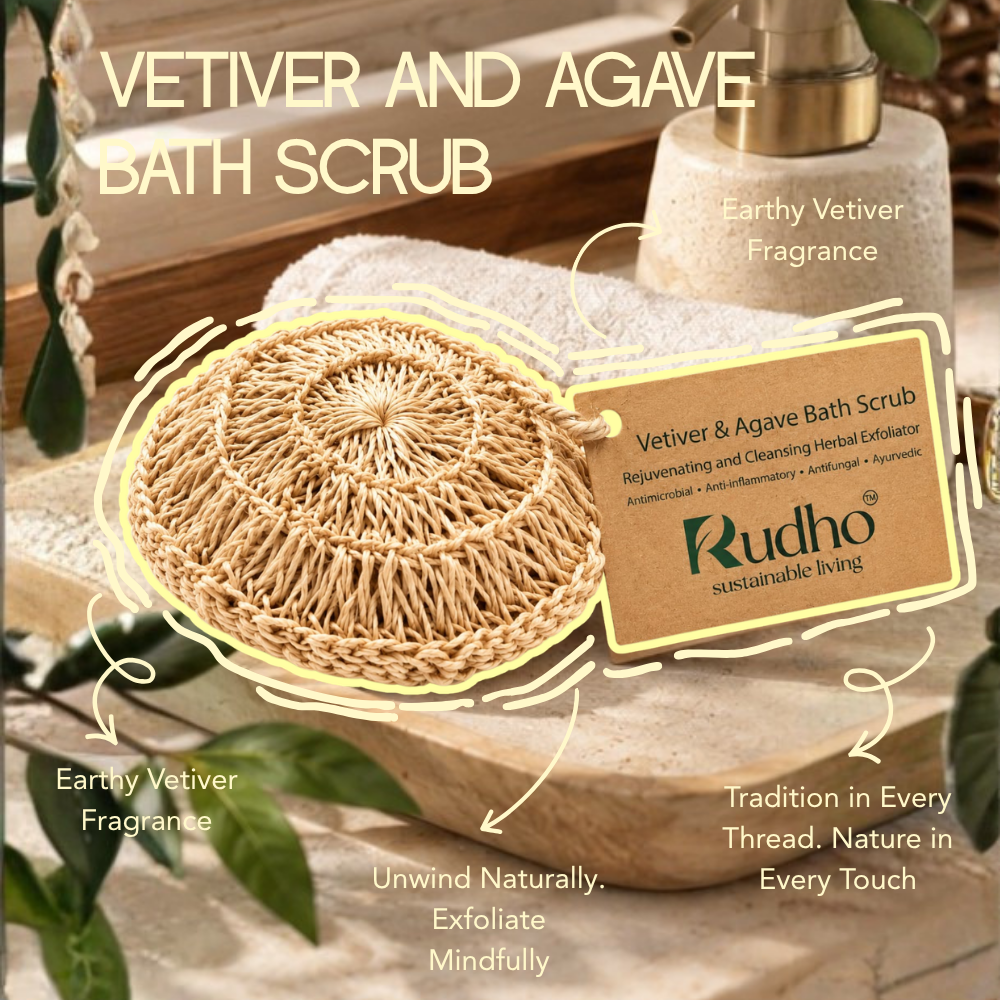
For a tongue cleaner, copper may be one. For a bath scrubber, natural fibres may be another.
Different purposes can call for different materials.
Sustainable Living Is Not About Buying More
Sustainability has itself become a shopping category. People are sometimes encouraged to throw away perfectly usable products and buy a whole new collection of the “eco-friendly variety”. That is not a meaningful approach.
If your comb is working perfectly, continue using it. If your bottle is reusable and working well, keep carrying it. If you own a durable product, take care of it.
Then, when replacement becomes genuinely necessary, consider the material and construction of the next product.
Use what you have.
Care for it.
Replace when necessary.
Choose thoughtfully next time.
That is a sustainable routine ordinary families can actually follow.
Neem Wood and RUDHO
For RUDHO, neem is not a valuable product simply because “natural” products are fashionable. It fits a larger philosophy: WHAT TOUCHES YOU EVERY DAY, MATTERS.
A comb touches your hair every day. A toothbrush is used every morning and night. A bath scrubber becomes part of your bathing routine. These products may look insignificant on their own, but together they make up part of everyday consumption.
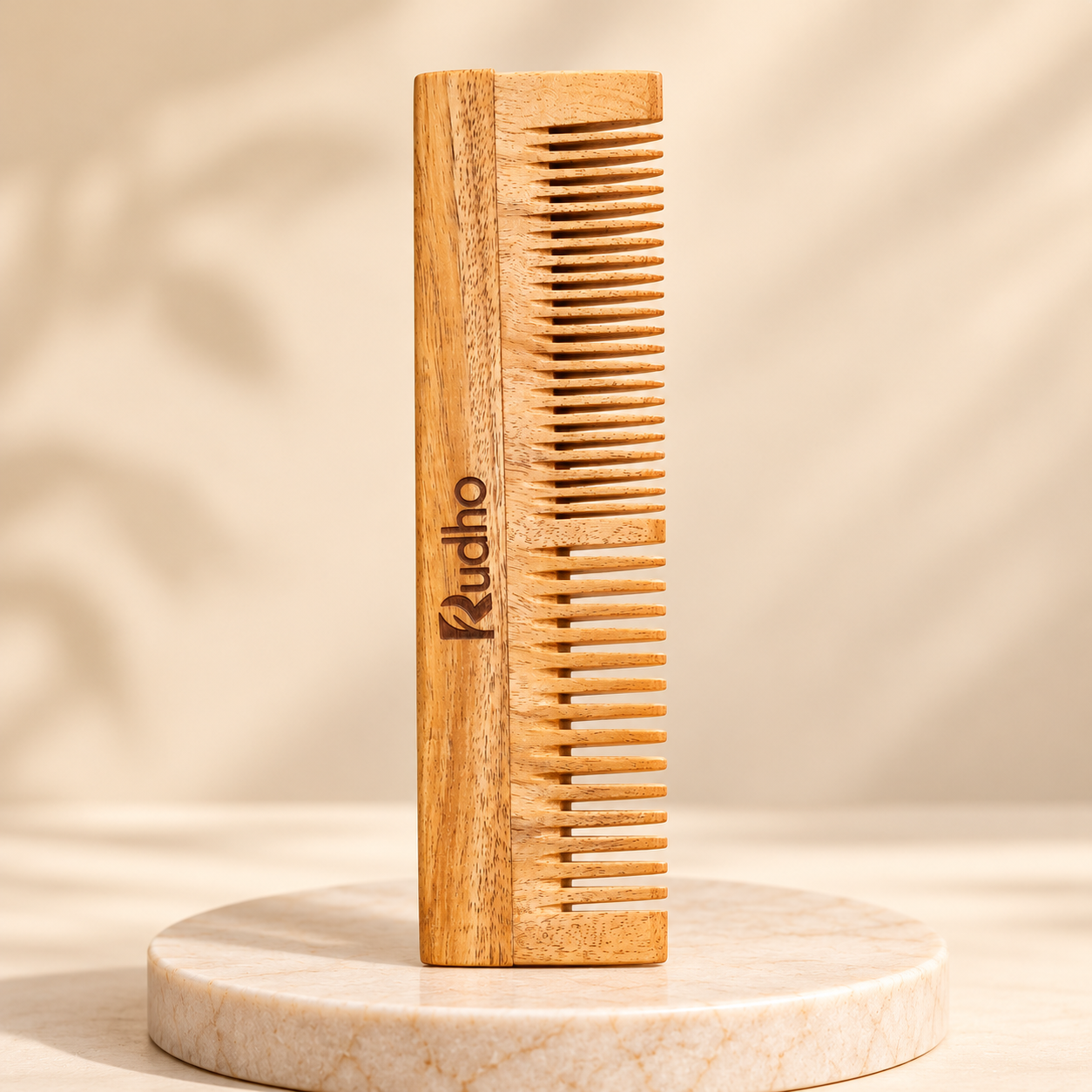
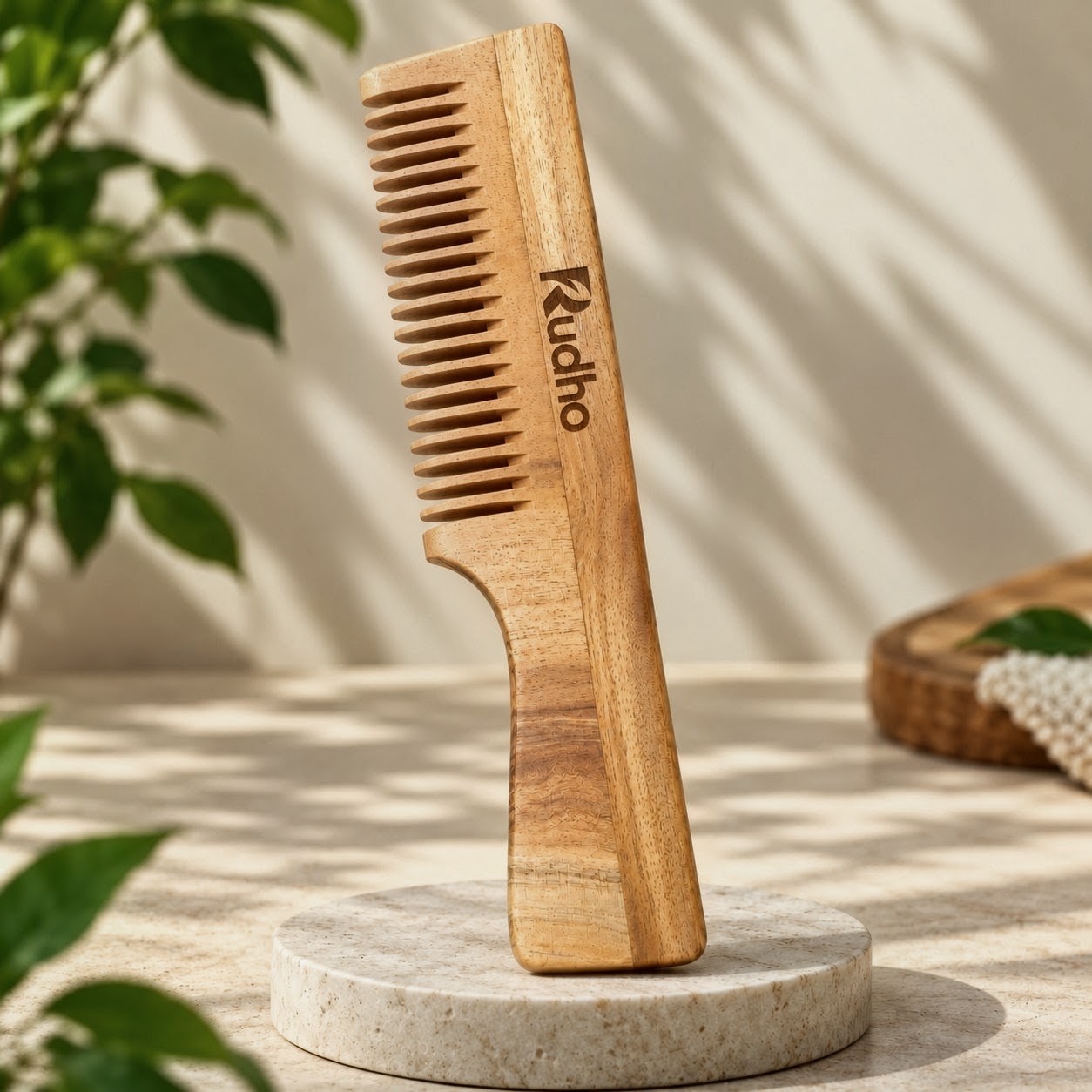
Our neem wood range currently includes Handle Neem Comb, Shampoo Neem Comb, Dual Tooth Neem Comb and Kids Neem Comb.
The aim is not to tell every customer that they need all four. The aim is to provide different designs so that a person can choose the design that fits their actual routine.
Natural Does Not Mean Care-Free
Neem wood is still wood. That means it deserves care.
It should not be soaked constantly in water. After being exposed to moisture, it should be allowed to dry properly. Its teeth and edges should be inspected for damage.
When a wooden product eventually becomes cracked or rough enough to catch hair, it should be replaced.
Natural materials can be beautiful and practical, but they are not indestructible.
Understanding how to care for them is part of sustainable ownership.
What RUDHO Should Never Promise About Neem Combs
Neem has a powerful traditional identity. That makes it tempting for brands to make equally powerful product claims. We should resist that temptation.
A RUDHO neem wood comb should not be sold with unsubstantiated promises that it cures dandruff, prevents hair fall, regrows hair, treats scalp infections or provides a guaranteed medical benefit.
Neem’s medicinal history is a fascinating subject. A neem wood comb is still a grooming product.
Keeping the two facts separate makes the RUDHO story more credible, not less powerful.
The Bigger Story: Material + People + Purpose
A truly sustainable product story has three parts.
Material: what is the product made from, and why was that material chosen?
People: who grows, supplies, shapes, finishes, checks and handles the product?
Purpose: does the product solve a genuine everyday need and have a reasonable useful life?
When these three things come together, sustainability becomes more meaningful. It moves beyond green packaging and becomes a way of thinking about products entering our home.
Why Artisan Livelihoods Matter
Craft skills can survive as long as they continue to create economic value.
If customers appreciate well-made natural material products, then businesses can create continued demand for skilled production.
But the aim should not be charity. An artisan does not need to be presented as someone waiting to be “saved”. An artisan is a skilled participant of the supply chain.
That shift in language is important. It respects craftsmanship as work. And when sustainable businesses grow responsibly, the opportunity is to grow together with the people who contribute to those products.
From an Indian Material to a Global Sustainable Story
Neem carries a distinctly Indian identity. That gives Indian sustainable brands an interesting opportunity. Instead of simply copying global “eco-product” trends, we can examine existing materials, skills and everyday practices here and present them responsibly to modern consumers.
Not by exaggerating them. Not by turning tradition into a miracle claim.
But by combining Indian material heritage + thoughtful design + artisan skill + modern quality expectations + responsible storytelling.
That is a meaningful way to take Indian sustainable products to the rest of the world.
Frequently Asked Questions
What is neem?
Neem (Azadirachta indica) is a tree native to the Indian sub-continent, and has a long history of use in traditional practices and agriculture. Different parts of the tree have been used for different purposes.
Is neem traditionally used in India?
Yes, neem has a long history for use in Indian household and traditional practices. However, traditional use should not automatically be interpreted as clinical proof for every modern neem product.
Does a neem wood comb have medicinal benefits?
A neem wood comb should be treated as a grooming product. Claims that it cures dandruff, prevents hair loss or treats scalp conditions should not be made without suitable evidence.
Why use neem wood for a comb?
Neem wood provides a natural material alternative to conventional moulded plastic for the main body of a comb. Product quality also depends on design, tooth spacing and finishing.
Are neem wood products sustainable?
The material alone does not determine sustainability. Responsible sourcing, manufacturing, product lifespan, packaging, transportation and end-of-life considerations all matter.
How can natural-material products support artisans?
Where production genuinely involves skilled craftspeople or small workshops, sustained responsible demand can contribute to economic opportunities. Brands should be transparent about their actual supply chain rather than making unsupported artisan-impact claims.
Does RUDHO work with artisans?
RUDHO should make specific livelihood or artisan-impact claims only where the sourcing relationship can be documented. The broader brand aim is to connect practical natural materials, responsible sourcing and livelihoods wherever that relationship genuinely exists.
Sustainable Living Is a Relationship, Not a Trend
The story of neem reminds us of something important. Nature gives us the material. People bring knowledge and skill. A product gives that material a practical purpose. And the customer decides how thoughtfully it will be used.
That entire relationship matters.
This is the sustainable future RUDHO wants to participate in – not a world where people simply buy more products because they have an “eco-friendly” label, but a world where we understand what we buy, what it is made from, who is behind it and why it deserves a place in our everyday life.
From nature.
Through skilled hands.
Into everyday life.
Used with purpose.