No products added!





A practical guide to reusable copper tongue cleaning for everyday oral-care routines.
SMALL HABIT. THOUGHTFUL MATERIAL. EVERYDAY CARE.
Tongue cleaning is not a new trend in India.
For many families, it has been part of the morning oral-care routine for generations. The material and design may have changed over time, but the habit itself is familiar.
Today, one of the most common reusable options is the copper tongue cleaner.
It is simple, compact and designed to be washed and reused. But like any personal-care product, it should be understood properly rather than sold with exaggerated claims.
A copper tongue cleaner is an oral-hygiene accessory. It should not be presented as a cure for disease, a detox tool or a miracle wellness product.
What Is a Copper Tongue Cleaner?
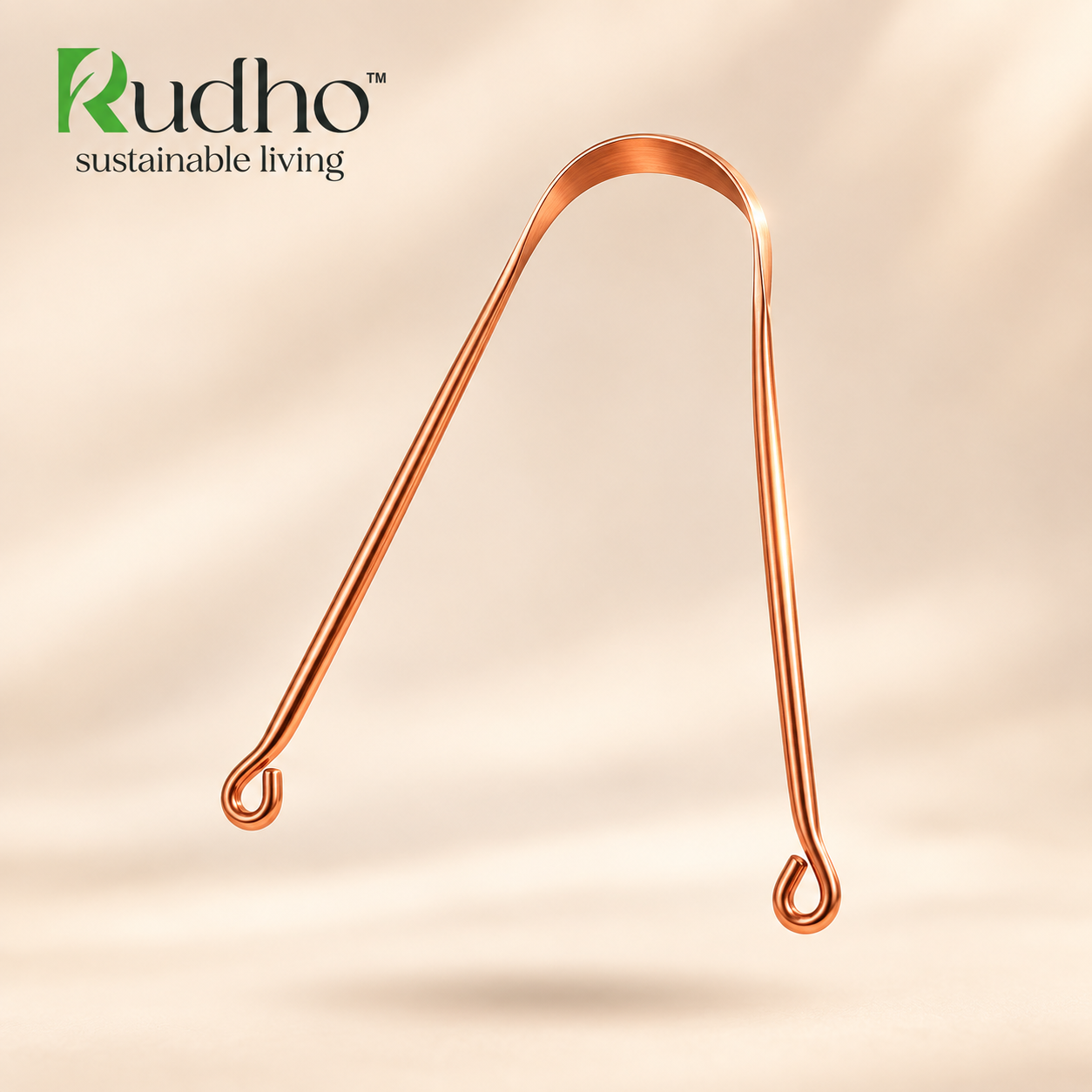
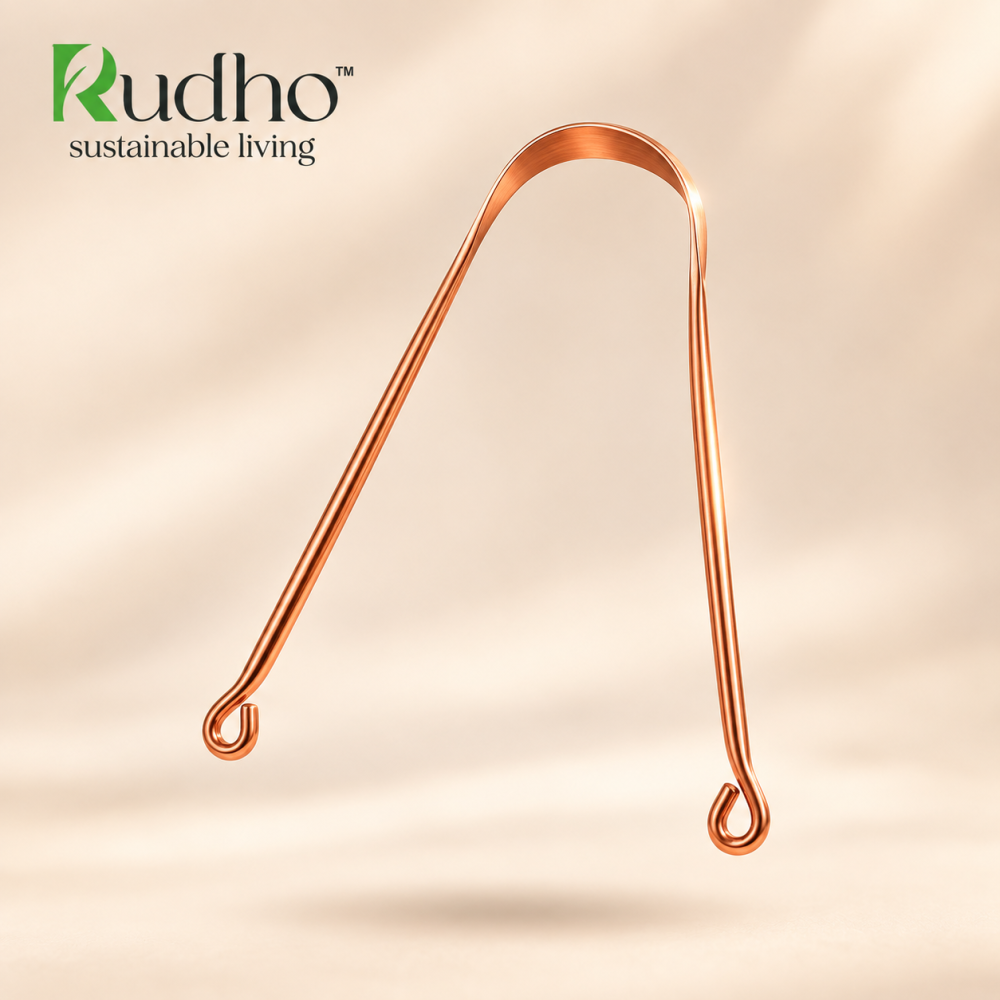
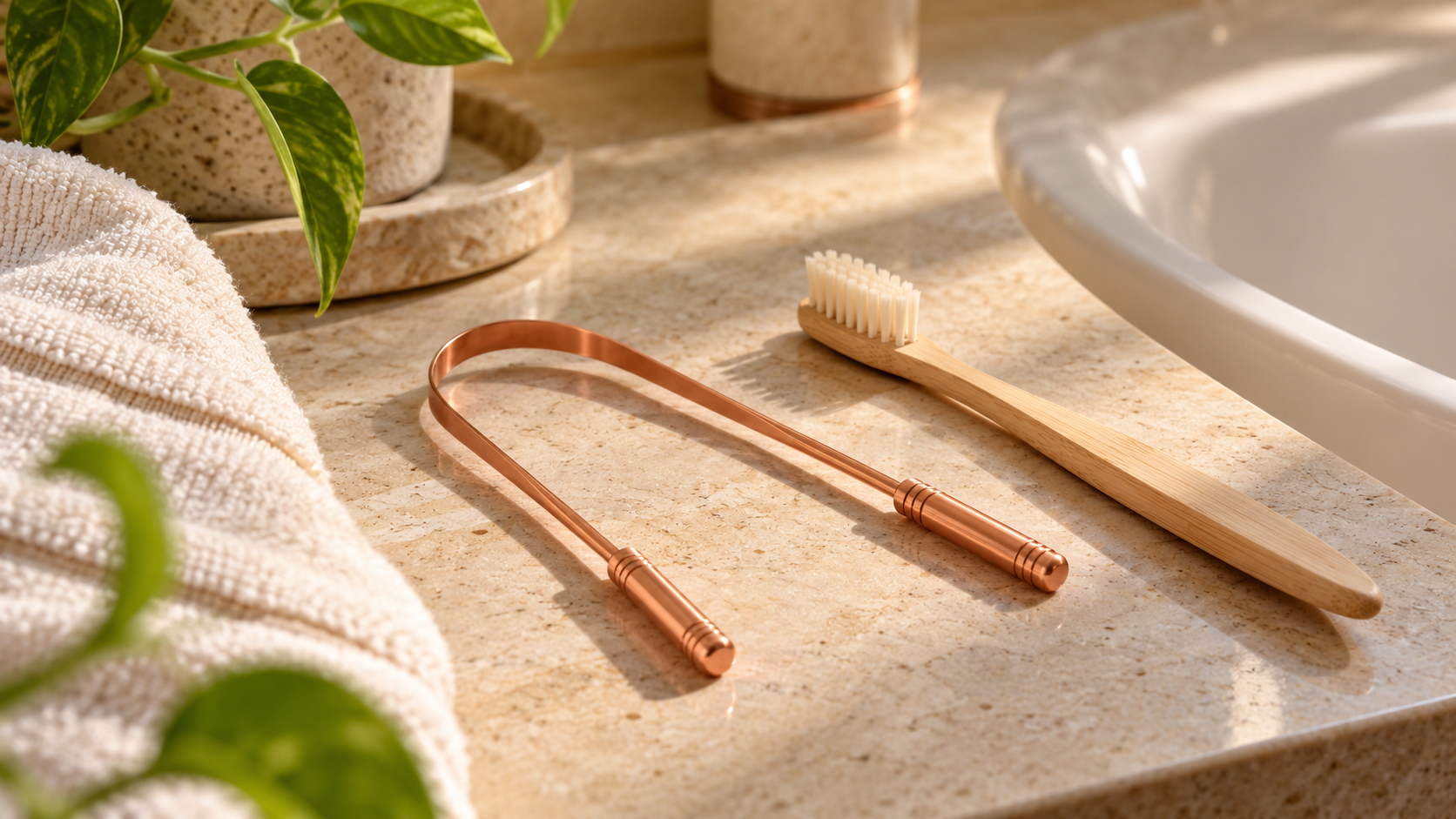
A copper tongue cleaner, also called a copper tongue scraper, is a reusable oral-care tool designed to pass gently over the surface of the tongue.
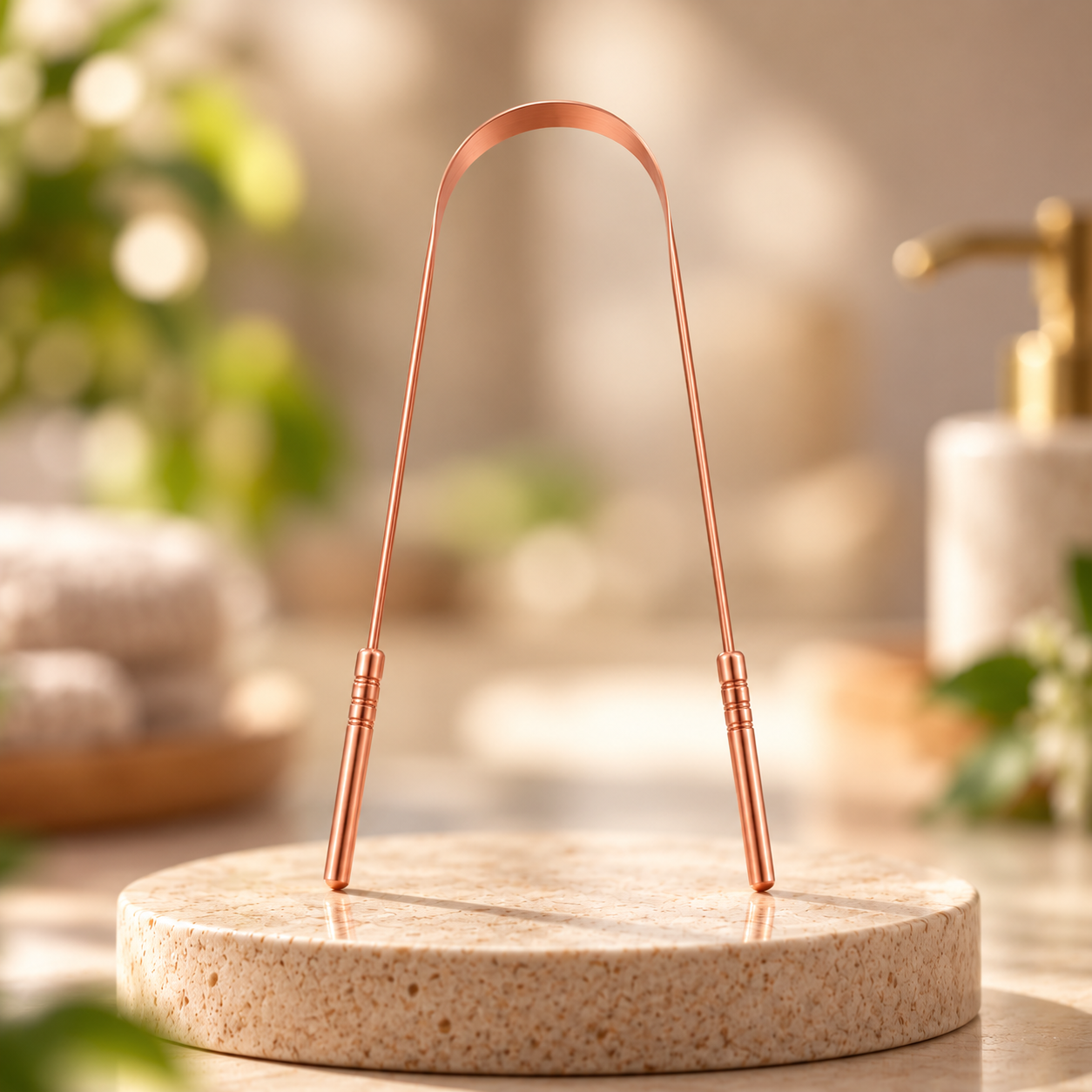
Most designs have a curved central section that contacts the tongue and two ends that are held with the hands.
The purpose is straightforward: to remove surface coating and debris from the tongue as part of a normal oral-hygiene routine.
At RUDHO, the current copper range includes two tongue-cleaner formats:
Copper Tongue Cleaner with Handle – designed with more defined gripping ends.
Normal Copper Tongue Cleaner – a simpler traditional-style format.
Why Do People Use a Tongue Cleaner?
The tongue has a textured surface, so food debris, cells and other material can collect on it.
Tongue cleaning is commonly used as an additional step alongside brushing and other routine oral-hygiene practices.
The key word is additional.
A tongue cleaner does not replace brushing, flossing where appropriate, professional dental care or treatment for oral-health problems.
What Are the Practical Benefits of a Copper Tongue Cleaner?
1. Reusable Construction
Unlike a disposable oral-care accessory, a copper tongue cleaner is intended to be cleaned and reused. This makes it a practical option for people who prefer durable everyday products.
2. Simple Daily Routine
The tool is easy to add to an existing morning or evening oral-care routine. It does not require batteries, charging or complicated instructions.
3. Durable Metal Material
Copper is a metal rather than a lightweight disposable plastic. With appropriate use and care, the product can remain part of a personal-care kit for a reasonable period.
4. Easy to Rinse After Use
The simple open design makes the tongue cleaner straightforward to rinse after use. Drying and storage still matter.
5. Compact for Home or Travel
A tongue cleaner takes very little space, which makes it easy to include in a bathroom, toiletry pouch or travel kit.
6. Alternative to Plastic Oral-Care Accessories
For customers looking to reduce the number of plastic products in their routine, a reusable copper tongue cleaner provides a different material option.
What Copper Tongue Cleaners Should NOT Be Claimed to Do
Copper and tongue cleaning are both surrounded by strong wellness claims online.
RUDHO should avoid unsupported statements that a copper tongue cleaner:
- detoxifies the whole body
- cures bad breath permanently
- kills all oral bacteria
- prevents every dental problem
- treats gum disease
- cures digestive problems
- replaces brushing or professional dental care
A stronger brand position is to explain the product clearly: a reusable copper tool for tongue cleaning as part of everyday oral hygiene.
How to Use a Copper Tongue Cleaner
Using a tongue cleaner should be gentle.
Step 1 – Rinse the cleaner
Rinse the copper tongue cleaner before use.
Step 2 – Hold both ends
Hold the two ends comfortably so the curved section can rest against the tongue.
Step 3 – Extend the tongue gently
Stand in front of a mirror if that helps you control the movement.
Step 4 – Place the cleaner towards the back of the tongue
Do not force it so far back that it causes discomfort or gagging.
Step 5 – Draw it gently forward
Use light pressure and pull the cleaner from back to front.
Step 6 – Rinse and repeat if needed
Rinse the cleaner between passes if required.
Step 7 – Clean and dry after use
Wash the tool properly and allow it to dry before storage.
Do not scrape aggressively. Strong pressure can irritate the tongue and does not automatically produce a better result.
How Often Should You Use It?
There is no need to turn tongue cleaning into an aggressive or repeated ritual throughout the day.
Many people include it once as part of their regular oral-care routine. What is appropriate can depend on the individual, comfort and dental guidance.
If tongue cleaning causes pain, bleeding, persistent irritation or other unusual symptoms, stop and seek advice from a dental professional.
Copper Tongue Cleaner with Handle vs Normal Tongue Cleaner
| Feature | With Handle | Normal Tongue Cleaner |
|---|---|---|
| Grip | More defined gripping ends | Simpler traditional grip |
| Use style | Easy for users who prefer a stronger hold | Minimal, compact format |
| Travel | Compact | Very compact |
| Material | Copper | Copper |
| Routine | Reusable oral-care tool | Reusable oral-care tool |
| Best for | Users who prioritise grip | Users who prefer simple design |
Neither design is automatically “better”. The right choice depends on which grip and shape you find easier to use.
Copper vs Plastic Tongue Cleaner
The biggest difference is material and expected reuse.
A copper tongue cleaner is a reusable metal product. Plastic tongue cleaners vary widely in design and quality, and some are also reusable.
So the comparison should not be reduced to “copper good, plastic bad”.
Instead, compare durability, grip, ease of cleaning, material preference, price and how long you realistically intend to use the product.
Copper vs Stainless Steel Tongue Cleaner
Both copper and stainless steel are used for reusable tongue cleaners.
Stainless steel generally has a highly stable surface and familiar modern appearance. Copper has a different material character and will naturally change appearance over time.
That visual change is one of the biggest things new copper users need to understand.
Why Does Copper Change Colour?
Copper can darken or develop a patina over time because the surface reacts with the surrounding environment.
That does not automatically mean the product is dirty or unusable.
However, users should still clean and inspect the product regularly according to the care instructions.
A natural change in copper colour should be explained clearly on the product page so customers do not mistake normal material behaviour for a defect.
How to Clean a Copper Tongue Cleaner
After each use
Rinse away any residue thoroughly.
Dry the product
Do not keep it continuously wet in a closed container.
Store in a clean place
Keep the tool dry between uses.
Clean according to product guidance
Use the care method recommended for the particular copper product.
Avoid harsh treatment
Do not repeatedly bend, scrape or damage the metal.
Inspect before use
If the tool develops sharp edges, cracks, serious deformation or damage, discontinue use.
Should You Polish Copper?
Some customers like copper to remain bright and shiny, while others are comfortable with the natural patina that develops.
If polishing is desired, follow safe product-specific care instructions rather than using random harsh chemicals that may leave residue on an oral-care tool.
The aim should be a clean, well-maintained product – not necessarily a permanently showroom-bright finish.
Pros and Cons of a Copper Tongue Cleaner
| Pros | Cons / Points to Consider |
|---|---|
| Reusable oral-care accessory | Requires cleaning after use |
| Durable metal construction | Copper naturally changes colour |
| Compact and travel-friendly | May cost more than basic plastic options |
| Simple to use | Aggressive scraping can irritate the tongue |
| Alternative material to plastic | Not a cure for oral-health problems |
| Available in different grip styles | Individual comfort varies |
How to Choose a Good Copper Tongue Cleaner
1. Check the material description
The seller should clearly state what the product is made from.
2. Check the edge
The section that touches the tongue should feel smooth rather than sharp.
3. Choose the grip you prefer
A handled design may suit users who want a stronger grip, while a normal design may appeal to those who prefer simplicity.
4. Look at the overall finish
The cleaner should be smooth, symmetrical and free from dangerous sharp areas.
5. Read care instructions
A reusable oral-care product should come with clear cleaning and storage guidance.
6. Avoid miracle claims
Be cautious when a listing claims to detox the body, cure disease or guarantee permanent freshness.
7. Buy the format you will actually use
There is no benefit in buying a premium product that remains unused in a drawer.
Who May Benefit from Adding Tongue Cleaning to Their Routine?
A copper tongue cleaner may appeal to adults who already practise tongue cleaning, people who prefer reusable oral-care accessories, customers looking to reduce plastic in their personal-care routine, and travellers building a compact oral-care kit.
But oral-care needs differ. If you have sores, pain, persistent tongue coating, bleeding, oral infections or other ongoing symptoms, a product blog is not the right place to diagnose the cause. Speak with a dental or healthcare professional.
How the Copper Tongue Cleaner Fits into RUDHO Oral Wellness
RUDHO’s oral-wellness direction is built around practical everyday products.
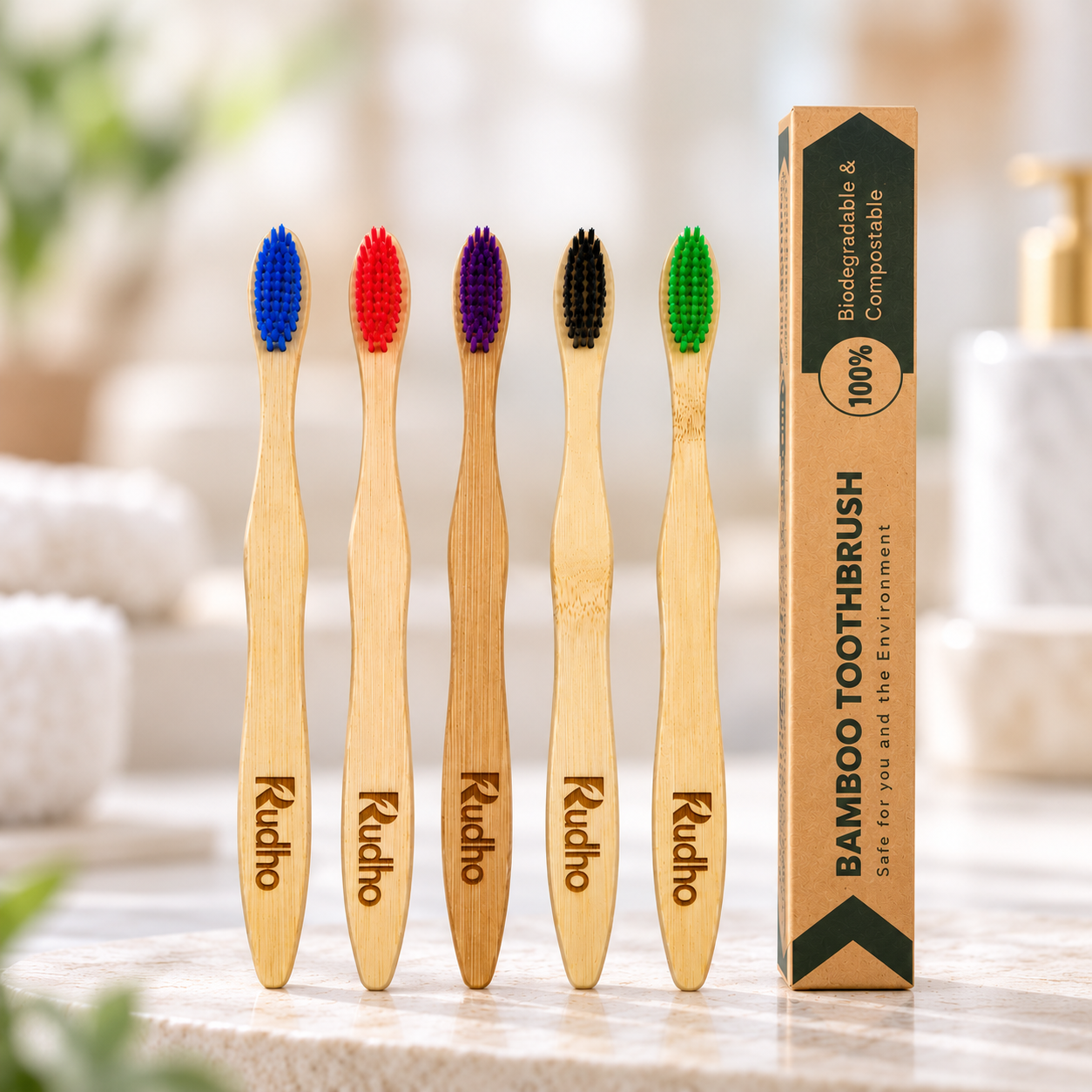
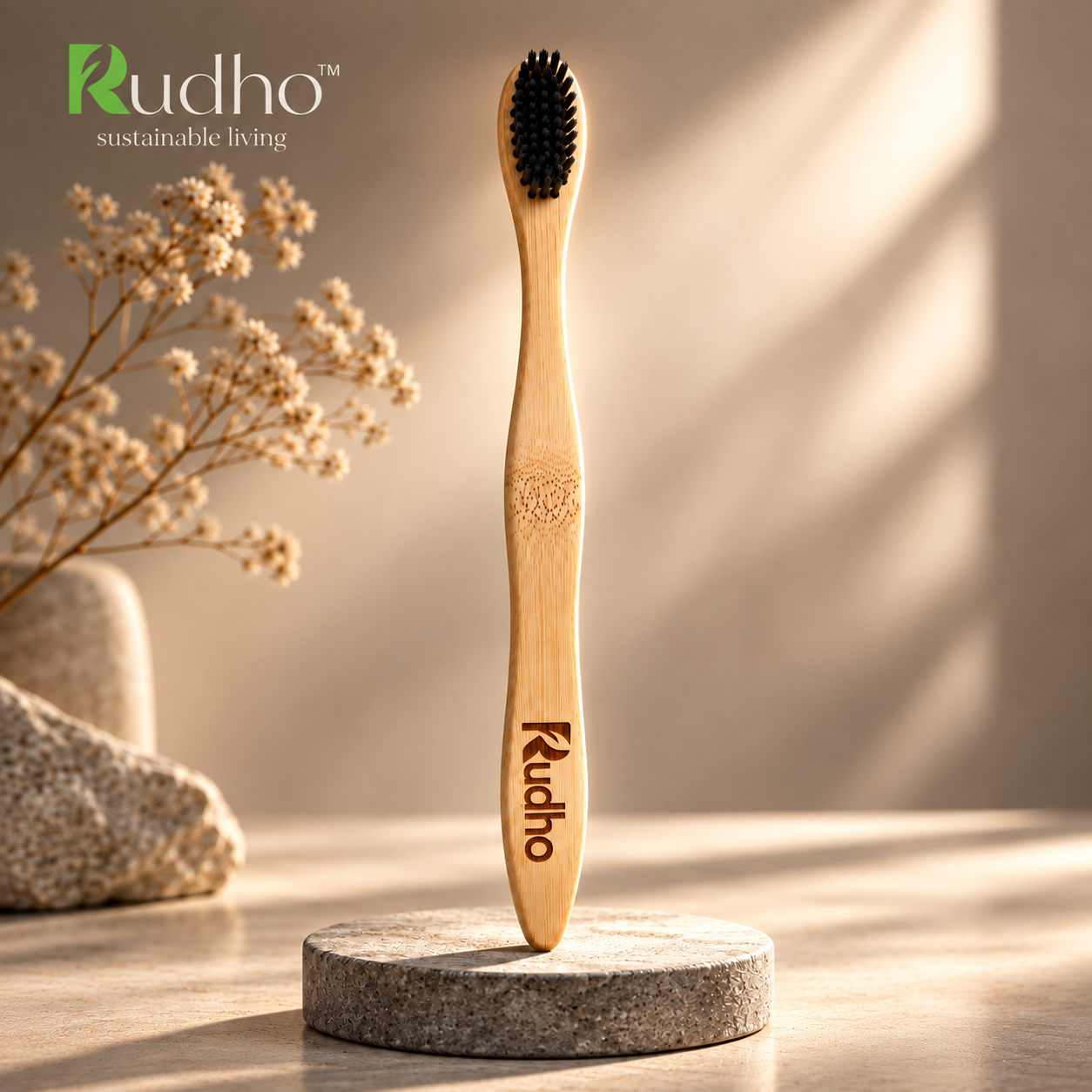
A simple routine may include a Bamboo Toothbrush + Copper Tongue Cleaner.
The bamboo toothbrush changes the handle material of a familiar daily product. The copper tongue cleaner introduces a reusable metal accessory for tongue cleaning.
The idea is not to create a complicated wellness ritual. It is to make thoughtful material choices within habits people already have.
Is Copper Sustainable?
Calling any commercial product “100% sustainable” is usually too simplistic.
Copper does have characteristics that make it interesting in sustainable product design: it is durable, reusable and widely recyclable as a metal.
But the full environmental picture still includes mining, processing, manufacturing, transportation, packaging, product lifespan and eventual recycling or disposal.
RUDHO’s strongest position is therefore not “zero impact”. It is: a durable reusable material thoughtfully used in an everyday product.
Frequently Asked Questions
What is a copper tongue cleaner?
A copper tongue cleaner is a reusable oral-care tool made from copper and designed to gently remove surface coating and debris from the tongue.
How do I use a copper tongue cleaner?
Hold both ends, place the curved section gently on the tongue, draw it forward with light pressure, rinse the tool and repeat only as needed.
Can a copper tongue cleaner cure bad breath?
It should not be marketed as a cure for persistent bad breath. Tongue cleaning may be one part of oral hygiene, but ongoing bad breath can have different causes and may need professional evaluation.
Why does my copper tongue cleaner turn dark?
Copper naturally changes colour and can develop a patina over time because of surface reactions with the environment.
Should I use a copper tongue cleaner every day?
Many people include tongue cleaning in a regular oral-care routine, but frequency and suitability depend on individual comfort and dental guidance.
Is copper better than stainless steel for tongue cleaning?
Both materials are used for reusable tongue cleaners. The better choice depends on product quality, personal material preference, grip, care and comfort.
What is the difference between RUDHO’s handled and normal copper tongue cleaners?
The handled version provides more defined gripping ends, while the normal version offers a simpler traditional-style format.
Can children use a copper tongue cleaner?
Age-appropriateness and supervision matter. Parents should seek appropriate dental guidance before introducing oral-care accessories for children.
A Small Habit Doesn’t Need Big Claims

A tongue cleaner is a small product.
That is exactly why it fits RUDHO’s philosophy so well.
Everyday sustainability is often not about dramatic lifestyle changes. It is about looking at simple products we already use and asking whether a more durable, reusable or thoughtfully chosen material makes sense.
For someone who already practises tongue cleaning, copper can be one such material choice.
Use it gently. Keep it clean. Care for it properly. And keep the claims realistic.
Explore RUDHO Oral Wellness
Copper Tongue Cleaner with Handle | Normal Copper Tongue Cleaner | Bamboo Toothbrushes
RUDHO – Sustainable Living
WHAT TOUCHES YOU EVERY DAY, MATTERS.
NATURAL MATERIALS. MODERN PERFORMANCE.